
Key Takeaways
- A correctional health assessment begins with a rapid intake screening within hours of arrival to identify urgent medical needs, withdrawal risks, and suicide indicators.
- A comprehensive health appraisal, including physical examination and laboratory testing, follows within 7 to 14 days of intake per NCCHC guidelines.
- Mental health screening and substance use evaluation are mandatory components of every correctional health assessment, not optional add-ons.
- Findings from the assessment are documented in a health record that protects both the individual and the facility from a legal and clinical standpoint.
- Accreditation standards from the NCCHC and ACA, along with the constitutional standard established in Estelle v. Gamble (1976), govern the quality and scope of these assessments.
- GENESYS Health Alliance supports correctional facilities in building standardized, compliant health assessment programs through staffing, protocols, and clinical management.
Table of Contents
- Why Correctional Health Assessments Matter
- The Stages of a Correctional Health Assessment
- Who Conducts Correctional Health Assessments?
- Documentation and Continuity of Care
- Standards That Guide Correctional Health Assessments
- How GENESYS Health Alliance Supports Correctional Facilities
- Frequently Asked Questions
A correctional health assessment is a structured medical and mental health evaluation conducted when an individual enters a jail, prison, or detention facility. It identifies urgent medical needs, chronic conditions, mental health risks, and substance use issues that require attention during incarceration. These assessments protect both the individual and the facility by establishing a documented baseline of health status from day one. GENESYS Health Alliance (genesyshealth.net) provides comprehensive correctional healthcare services built around this critical intake process.
Why Correctional Health Assessments Matter
People entering correctional facilities arrive with a wide range of health histories. Many have had limited access to consistent primary care before incarceration. Studies by the Bureau of Justice Statistics have found that a significant share of incarcerated individuals report chronic conditions such as hypertension, diabetes, asthma, and hepatitis C. Mental health disorders and substance use disorders are also disproportionately common in this population.
A thorough intake assessment allows healthcare staff to:
- Identify conditions that need immediate treatment
- Flag withdrawal risks from alcohol, opioids, or benzodiazepines
- Screen for infectious diseases that could spread within the facility
- Establish medication continuity for individuals already on prescriptions
- Document any injuries present at the time of booking
Without a structured assessment, serious medical emergencies can go undetected during the highest-risk window of incarceration. Research published in journals such as the American Journal of Public Health has consistently noted that the first 72 hours after intake carry elevated risks for death by suicide and medical crisis.
Facilities that partner with experienced correctional healthcare organizations like GENESYS Health Alliance use standardized assessment protocols aligned with guidelines from the National Commission on Correctional Health Care (NCCHC) and the American Correctional Association (ACA).
The Stages of a Correctional Health Assessment
A correctional health assessment typically unfolds in several distinct phases, each serving a specific clinical purpose.
Initial Screening at Intake
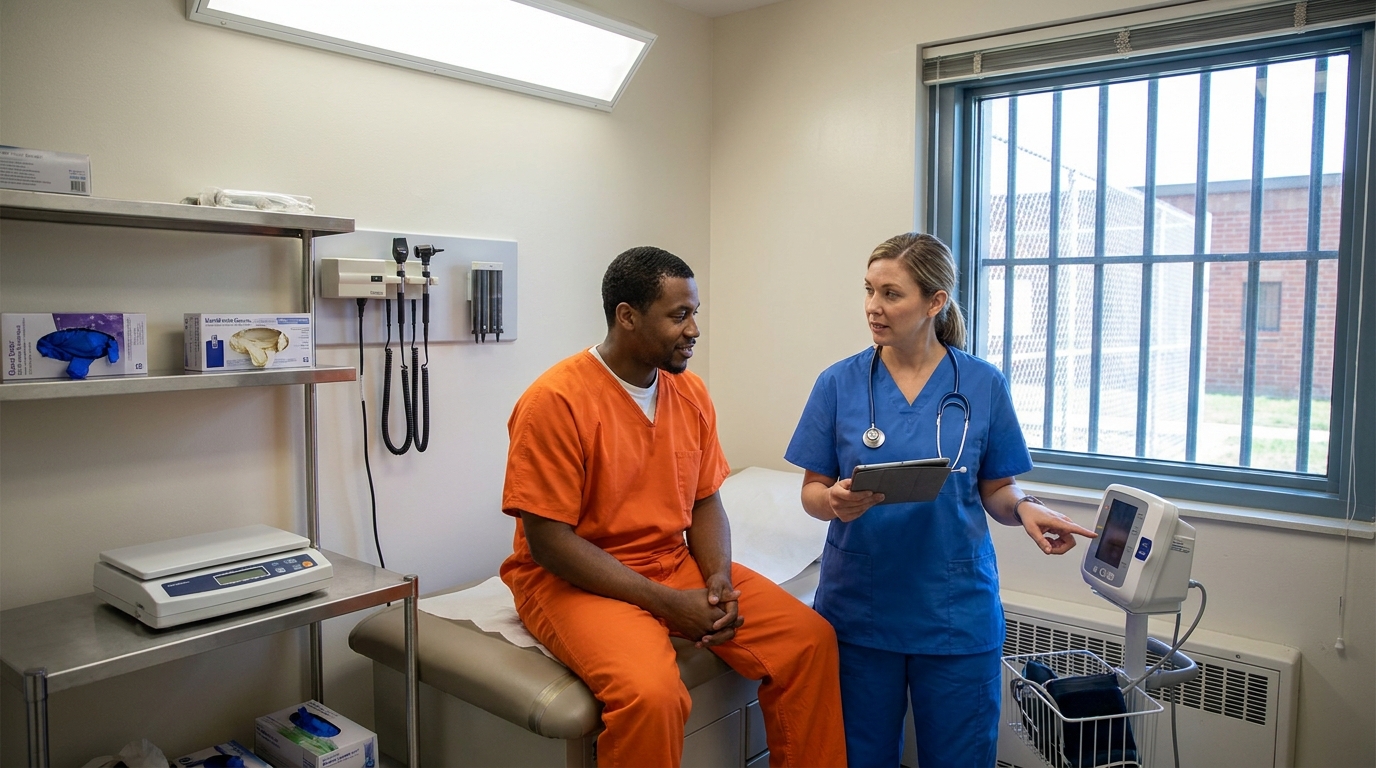
The first step happens quickly, often within hours of a person arriving at the facility. A trained healthcare professional, usually a nurse or licensed clinician, conducts a brief screening that covers:
- Current complaints of pain or illness
- Visible injuries or signs of trauma
- Vital signs (blood pressure, pulse, temperature, respiratory rate, oxygen saturation)
- Current medications, including prescriptions, over-the-counter drugs, and supplements
- Known allergies
- History of seizures, diabetes, heart conditions, or respiratory problems
- Pregnancy status for female detainees
- Suicide risk indicators, including recent attempts, current ideation, or recent losses
- Signs of intoxication or withdrawal
This initial screening is not a comprehensive physical exam. Its purpose is to catch anything that requires same-day medical attention and to flag individuals who need closer observation or immediate transfer to a higher level of care.
Comprehensive Health Appraisal
Within 7 to 14 days of intake (the exact timeline varies by facility policy and accreditation standards), a more thorough evaluation takes place. The NCCHC recommends a comprehensive health appraisal be completed within 7 days for jails and 14 days for prisons for most populations.
This appraisal is conducted by a physician, nurse practitioner, or physician assistant and typically includes:
Medical History Review
The clinician gathers a detailed health history covering past surgeries, hospitalizations, childhood illnesses, family history of hereditary conditions, and reproductive health history. Providers also document any history of head injuries or neurological events.
Physical Examination
A head-to-toe physical examination is performed. This covers cardiovascular and respiratory function, abdominal assessment, musculoskeletal review, skin condition (including wounds or lesions), and neurological screening. For women, this includes reproductive health considerations.
Laboratory Testing
Standard lab work typically ordered during a correctional health appraisal includes:
- Complete blood count (CBC)
- Basic or comprehensive metabolic panel
- Tuberculosis (TB) testing, often via the tuberculin skin test (TST) or interferon-gamma release assay (IGRA)
- Sexually transmitted infection (STI) screening, including HIV, syphilis, gonorrhea, and chlamydia
- Hepatitis B and Hepatitis C testing
- Urinalysis
- Blood glucose screening for diabetes risk
- Pregnancy testing when indicated
Dental Screening
Many accredited correctional facilities include a basic dental screening at or shortly after the comprehensive appraisal to identify urgent dental needs such as abscesses, broken teeth, or oral infections.
Vision and Hearing
Basic vision and hearing screening may also be conducted, particularly for older adults or individuals who report sensory difficulties.
Mental Health Screening and Evaluation
Mental health screening is an integral part of every correctional health assessment, not a separate optional process. The initial suicide screening at intake feeds into a more detailed mental health evaluation that examines:
- History of psychiatric diagnoses (such as major depressive disorder, bipolar disorder, schizophrenia, PTSD, or anxiety disorders)
- Prior psychiatric hospitalizations or crisis interventions
- Current or recent use of psychotropic medications
- History of self-harm or suicide attempts
- Current symptoms including hallucinations, delusions, or severe mood disturbances
- Trauma history
Licensed mental health clinicians use validated screening tools during this process. Instruments such as the Columbia Suicide Severity Rating Scale (C-SSRS) and the Patient Health Questionnaire-9 (PHQ-9) are commonly used in correctional settings because they provide structured, documented assessments that hold up to clinical and legal scrutiny.
Individuals identified as high risk are placed on suicide watch or observation status and referred for follow-up psychiatric evaluation.
Substance Use Disorder Screening
Substance use screening is a critical component because withdrawal from alcohol, opioids, or benzodiazepines can be life-threatening if unmanaged. Clinicians use structured tools such as the Clinical Opiate Withdrawal Scale (COWS) and the Clinical Institute Withdrawal Assessment for Alcohol (CIWA-Ar) to assess withdrawal severity.
Based on screening results, providers can:
- Initiate medically supervised withdrawal protocols
- Continue medication-assisted treatment (MAT) for individuals already receiving it in the community, such as methadone or buprenorphine
- Connect individuals with in-facility substance use counseling programs
Many states now require correctional facilities to offer MAT continuity by law, and healthcare contractors like GENESYS Health Alliance are positioned to support facilities in meeting those legal requirements.
Chronic Disease Management Planning
For individuals with identified chronic conditions, the assessment process does not stop at diagnosis. The healthcare team develops an individualized care plan that outlines:
- Medication regimens and administration schedules
- Dietary accommodations (for example, a diabetic or renal diet)
- Monitoring frequency (such as weekly blood pressure checks for hypertensive individuals)
- Referral to specialty care if the condition requires expertise beyond the facility’s on-site capacity
Conditions commonly managed in this phase include Type 1 and Type 2 diabetes, hypertension, asthma, chronic obstructive pulmonary disease (COPD), epilepsy, HIV, and hepatitis C.
Who Conducts Correctional Health Assessments?
The clinical staff involved in assessments varies based on the size and type of facility, but generally includes:
- Registered Nurses (RNs): Typically lead the initial intake screening
- Licensed Practical Nurses (LPNs) or Licensed Vocational Nurses (LVNs): Support screening and monitoring functions
- Physicians, Nurse Practitioners (NPs), or Physician Assistants (PAs): Conduct the comprehensive health appraisal
- Licensed Clinical Social Workers (LCSWs) or Psychologists: Perform mental health evaluations
- Psychiatrists: Evaluate and treat individuals with serious mental illness or complex psychiatric needs
- Dentists: Conduct oral health screenings
GENESYS Health Alliance provides staffing and clinical management support across these disciplines, helping correctional facilities build consistent, compliant healthcare teams.
Documentation and Continuity of Care
Every finding from a correctional health assessment is recorded in the individual’s health record. This documentation serves multiple purposes:
- It creates a legal record of health status at the time of booking
- It allows ongoing treatment providers to make informed decisions
- It supports compliance audits by oversight bodies such as the NCCHC, ACA, or the U.S. Department of Justice
- It protects the facility against liability claims related to pre-existing conditions or inadequate care
Well-documented assessments also support continuity of care when an individual is transferred to another facility or released back into the community. Discharge planning, which may include arranging follow-up appointments with community providers or connecting individuals with reentry health services, often begins with information gathered during the initial assessment.
Standards That Guide Correctional Health Assessments
Several national bodies set the standards that reputable correctional healthcare providers follow:
National Commission on Correctional Health Care (NCCHC)
NCCHC accreditation requires facilities to follow detailed standards for intake screening, health appraisals, mental health evaluation, and chronic disease management. Facilities that meet these standards demonstrate a verified commitment to clinical quality.
American Correctional Association (ACA)
ACA accreditation covers healthcare services as part of its broader correctional facility standards.
Joint Commission
Some larger correctional health programs pursue Joint Commission accreditation, which applies standards used across hospital and ambulatory care settings.
Federal Regulations
The Eighth Amendment to the U.S. Constitution, as interpreted through cases such as Estelle v. Gamble (1976), establishes that incarcerated individuals have a constitutional right to adequate medical care. This legal framework shapes the minimum expectations for all correctional health assessments.
GENESYS Health Alliance aligns its clinical protocols with these established standards to help facility partners maintain compliance and deliver defensible, high-quality care.
How GENESYS Health Alliance Supports Correctional Facilities
GENESYS Health Alliance (genesyshealth.net) works with jails, prisons, and detention facilities to build and operate health services programs that are clinically sound, legally defensible, and operationally efficient.
The organization’s approach to correctional health assessments emphasizes:
- Standardized intake protocols that reduce variation and missed diagnoses
- Trained clinical staff who understand the unique demands of correctional environments
- Technology-supported documentation for accurate, auditable health records
- Chronic disease management frameworks that reduce emergency events and costly outside hospitalizations
- Mental health and substance use services integrated into the broader assessment process
Facilities looking to improve their intake health assessment process, address accreditation gaps, or build a more comprehensive healthcare program can learn more at genesyshealth.net.
Frequently Asked Questions
How long does a correctional health assessment take?
The initial intake screening typically takes between 15 and 45 minutes depending on the individual’s health complexity and the facility’s staffing resources. The comprehensive health appraisal, which follows within one to two weeks of intake, generally takes 30 to 60 minutes. Individuals with multiple chronic conditions or significant mental health needs may require additional time and follow-up appointments.
What happens if a serious medical condition is found during the assessment?
If a clinician identifies an acute or life-threatening condition during the assessment, such as uncontrolled diabetes, signs of a cardiac event, or severe withdrawal, the individual is referred for immediate treatment. This may involve on-site medical management, transfer to an infirmary, or emergency transport to an outside hospital. Correctional facilities have a constitutional obligation to provide adequate medical care, which means serious findings cannot be ignored.
Are mental health services part of the correctional health assessment?
Yes. Mental health screening begins at intake and continues through the comprehensive appraisal. Suicide risk screening is mandatory in most accredited facilities. Individuals who screen positive for mental health conditions are referred to licensed mental health staff for further evaluation, and treatment plans are developed accordingly. This includes evaluation for serious mental illnesses such as schizophrenia, bipolar disorder, and major depressive disorder.
What standards govern correctional health assessments?
Correctional health assessments are guided by standards from the National Commission on Correctional Health Care (NCCHC), the American Correctional Association (ACA), and in some cases the Joint Commission. Constitutionally, the Eighth Amendment standard established in Estelle v. Gamble (1976) requires that facilities address serious medical needs. State regulations may impose additional requirements depending on jurisdiction.
Can an individual refuse a correctional health assessment?
Individuals in correctional facilities do have some rights regarding medical care, including the right to refuse certain treatments. However, intake screening is generally considered a safety requirement for the facility, not just an optional service for the individual. Facilities typically document any refusals in detail, and clinicians may conduct visual observations even when a full assessment is declined. Refusals are handled according to facility policy and applicable state law, with a focus on managing risk to both the individual and the broader facility population.